Snorkelling guide
The best snorkelling in The Bahamas, island by island
The water here is not uniformly perfect. Some reefs are picked over, some are a two-hour run, and some are twenty minutes from the dock and better than anything on a postcard. This is how to tell them apart.
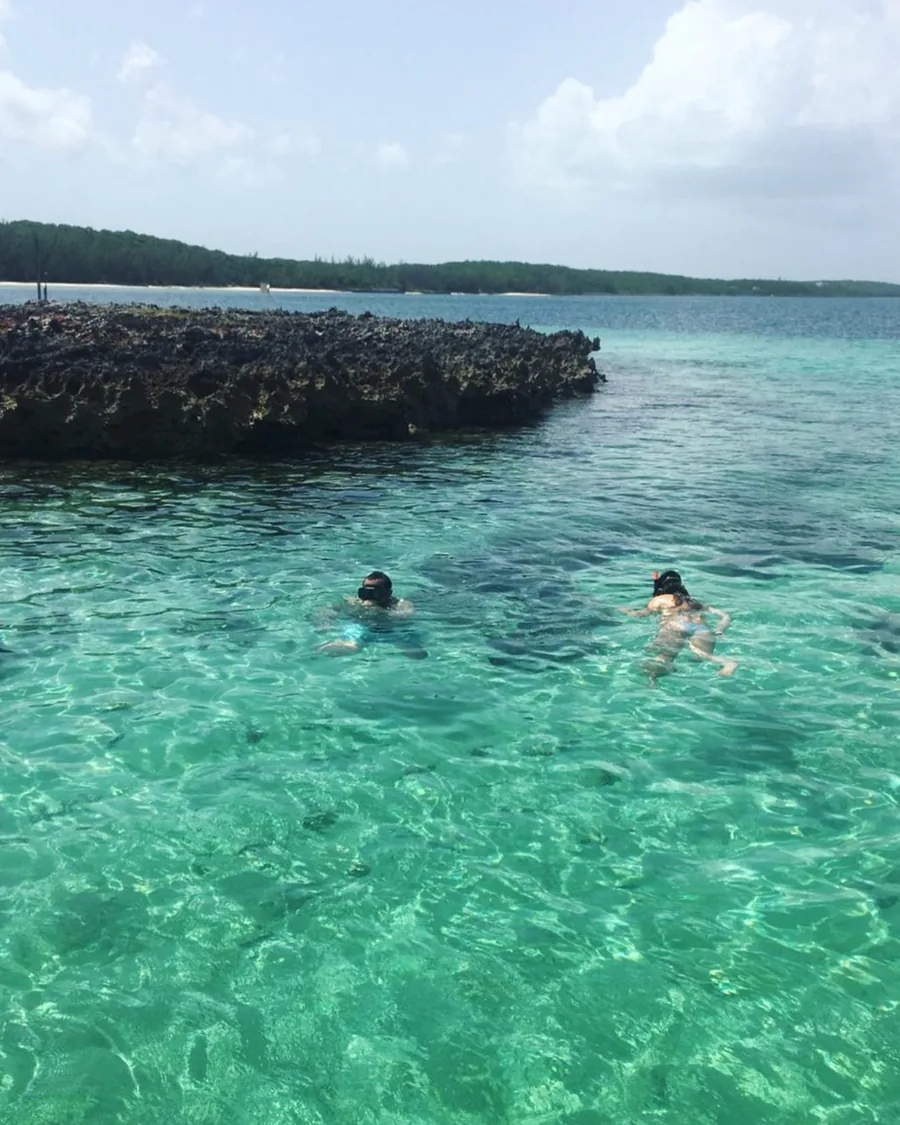
People arrive in Nassau with a mental picture of Bahamian water — a flat turquoise sheet with fish suspended in it — and mostly the picture is accurate. What the picture leaves out is geography. The Bahamas sits on a series of shallow banks, and the reef life clusters where those banks meet deeper water. Find the edge and you find the fish. Stay in the middle of the bank and you find sand.
So the question is never really “where is the best snorkelling”. It is “how far are you willing to run, and what else do you want from the day”. Below are the four areas we actually take guests to, in order of distance from the Nassau dock.
New Providence: the reefs on Nassau’s doorstep
You do not have to go far. The north and west sides of New Providence hold a string of shallow reefs that are fifteen to thirty minutes from the dock, which means you can snorkel in the morning and be back at your hotel for lunch.
Sea Garden, off Paradise Island, is the classic first snorkel: coral heads in eight to fifteen feet of water, plenty of sergeant majors, parrotfish and the occasional barracuda hanging motionless under the boat. It is busy in the middle of the day because the cruise excursions use it, which is one good reason to go early or late.
Athol Island sits just east of Paradise Island and gets a fraction of that traffic. The reef is patchier but the fish are calmer, and there is a shallow sandy gutter between the coral heads that suits children and nervous swimmers.
Further west, around Clifton Bay and Goulding Cay, the bottom changes character: more sponge, more soft coral, fewer people. This is where we take guests who have snorkelled before and want something quieter than a postcard reef.
Nassau also has its own small piece of theatre: the sunken statues in the shallow water near the western reefs, put there for divers and now furred with coral and patrolled by snappers. It photographs well and it is a short swim from the boat.
Rose Island and the cays to the east
Rose Island runs for about seven miles along the north-east side of New Providence, and the whole eastern end of it is a marine park. Ten to fifteen miles from the dock depending on where you start, so twenty to thirty minutes on the Scout.
What makes it worth the run is the variety in a small area: a protected reef on the ocean side, a flat sandy lagoon on the bank side, and a handful of beaches that are empty on all but the busiest days. You can snorkel a reef, rinse off on a sandbar and eat lunch under a palm in the same hour.
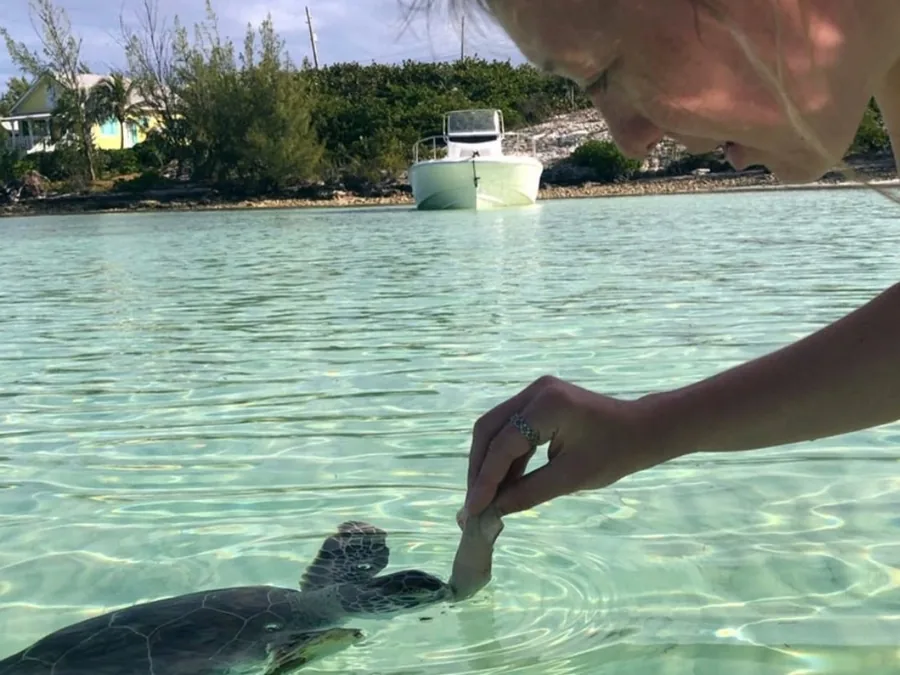
The Sandy Cay area east of Rose Island is where the turtles are. Green turtles graze the seagrass in six to ten feet of water, and because the bottom is sand and grass rather than coral, it is one of the easiest places in the Bahamas to swim with them — no reef to crash into, no surge, and a clear view in every direction.
Eleuthera and Harbour Island
Eleuthera is a long, thin island about fifty miles east of Nassau, and it is a different proposition: a full day, an early start, and weather that has to cooperate because you are crossing open water to get there.
The reward is scale. Current Cut is a narrow channel where tidal water rips through between Eleuthera and Current Island — a drift snorkel rather than a stationary one, and not a place for beginners on a running tide. Devil’s Backbone off Harbour Island is a line of shallow coral and rock that has wrecked ships for centuries and now holds big schools of fish in the washes between the heads.
On land, the Glass Window Bridge is the photograph everyone wants: the Atlantic on one side, the pale bank on the other, a strip of rock between them. Preacher’s Cave near the northern end is where shipwrecked settlers and enslaved Africans sheltered in the seventeenth and eighteenth centuries, and it is worth the walk for the history alone. Sapphire Blue Hole is a deep freshwater pool in the bush, blue in a way that looks edited.
We are honest with guests about this one: it is a long day, and if the wind is up on the Atlantic side we will tell you to choose something else rather than sell you a rough ride.
The Exumas
The Exuma cays begin about thirty-five nautical miles south-east of Nassau and continue for a hundred miles beyond that. Even the near cays — Allen’s Cay, Highborne, Norman’s — are a serious run, and the famous ones are further still.
Thunderball Grotto at Staniel Cay is a collapsed cave you swim into at slack tide, with light coming down through holes in the roof and fish everywhere. It is genuinely one of the great snorkels of the Caribbean. It is also roughly seventy miles from Nassau, which means it is a liveaboard or fly-and-meet destination, not a day trip from a Nassau dock.
Closer in, Allen’s Cay has the rock iguanas, Compass Cay has the nurse sharks in the marina, and Big Major Cay has the swimming pigs. All of them are wonderful and all of them are a long way south. If the Exumas are the point of your trip, the honest advice is to base yourself in Exuma or take a flight and join a boat there, rather than spend six hours of a eight-hour charter in transit.
When to go, and what changes
Bahamian water is warm enough to snorkel year-round — roughly 24°C in February, 29°C in August. Visibility is usually best in the winter dry season, when the water is clearer but the north-east swell is stronger. Summer brings flatter seas and calmer afternoons, at the cost of occasional tropical weather and more afternoon cloud.
The single biggest factor in whether you have a good snorkel is not the season, it is the wind direction. A reef that is sheltered in a southerly is a washing machine in a northerly. This is why we ask about your dates rather than promising a fixed itinerary: the route gets chosen the day before, based on where the lee is.
Morning is nearly always better than afternoon. The wind builds through the day, the cruise crowds arrive around ten, and the light is flatter and clearer before it. If your schedule allows, book the early departure.
How to actually get there
There is no public ferry to the reefs. Your options are a ship excursion with sixty other people and a fixed forty-minute stop, a rental boat you drive yourself (not advisable on an unfamiliar bank), or a private charter with a captain who knows where the lee is.
A private charter is the only version where the itinerary bends around your group. If the children are tired after two stops, you leave. If the turtles are feeding in one spot, you stay. If the wind comes up, you move to the sheltered side instead of enduring it because the schedule says so.
The best snorkel of your trip is usually the one nobody else is at.
If you want to see what that looks like in practice, the snorkelling charter page covers the routes we run most often, and the pigs and turtles tour combines the turtle grass with a stop at Pig Island.